

Performances (1969-2019)
This is a selection of performances that are part of the Queer Tragedy archive (1969-2019). This page is under constant construction, so check regularly for more performances!
Another Medea (2013, 2015)
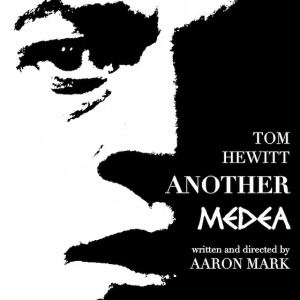
Written and directed by Aaron Mark; starring Tom Hewitt.
31 March-9 April 2013, The Duplex Cabaret Theatre (NY, USA); 19-30 October 2013, All For One Theatre Festival at Cherry Lane Studio Theatre (NY, USA); 14-31 January 2015, The Wild Project (NY, USA)
Another Medea spins, with horror, intelligence and dramatic skill, the story of the filicide and sorceress Medea into a story of a gay couple in New York exploring manipulation, isolation, otherness, displacement, paternity rights and marital allegiances. The first run of Another Medea took place weeks before the decisions of United States v. Windsor, repealing the Defense of Marriage Act in June 2013, further consolidating same-sex marriage. It was re-staged in January 2015, months before the Supreme Court decided on Obergefell v Hodges, guaranteeing same-sex marriage in the whole of the US. The subject matter, development and staging of Another Medea therefore appear as most topical in thinking through, questioning and highlighting the debate on same-sex marriage in the US before it became legal nationwide, as well as linked issues such as gay parenthood and same-sex domestic abuse.
Script is available here.
Reviews by NYT, TimeOut and Theater Pizzazz. Interviews with Huffington Post and Stagelight.
Kitchen Matters (1990)

Written by Bryony Lavery; directed by Nonna Shephard; produced by Gay Sweatshop
Starring Peta Masters as Trixia; Maria Esposito as Terry Elyot; Michael Matus as Crispian Bliss; Stacey Charlesworth as Penny The Poison; Cordelia Ditton as Felicity/Computer/Agatha; Chorus by the above.
11 October-8 December 1990. UK Tour, including Portsmouth, Bristol, Leicester, Bradford, Oxford, London, Cambridge, Northampton, Birmingham and Manchester. 5-9 February 1991. Queen Elizabeth Hall (London)
In late 1990, the only gay and lesbian touring company in the UK, Gay Sweatshop, staged their own queer version of Euripides’ Bacchae, Kitchen Matters. The play and its performance were highly conditioned by Section 28 and became a clear response to Thatcherite anti-gay politics. Kitchen Matters was announced as perhaps Gay Sweatshop’s Last Supper, since the company was facing closure after 15 years of critical and audience success, due in part to the prohibitions of Section 28 and Thatcherite stances in funding. Gay Sweatshop staged, appropriately, the story of a peroxide-blonde lesbian goddess, Trixia, appearing in a domestic kitchen to avenge the insult she has suffered by destroying the Dinasty-esque homophobic Thatcherite in control, Penny the Poison. In staging her revenge, Trixia sets up a women-only party off-stage that serves to attract Penny to her end at the hands of her own pinny-clad lesbian mother. With much wit and comedy, as well as mockeries of theatrical and sexual stereotypes and references to promiscuity and AIDS, Kitchen Matters became Gay Sweatshop’s own vehicle to bring divine queer retribution over conservative Britain, Thatcherite norms and the silencing of Section 28.
Designer: Kate Owen
Producer: David Benedict
Music: Laka Daisical
Production & Stage Manager: Hannah Arbeid
Lighting Design & Technical Manager: Matt Shadder
Technician: Paule Constable
Design Assistant: Barry Cunningham
Props: Karen Wood
Sound Effects: Katrina Accosta
And She Would Stand Like This (2017)

Written by Harrison D. Rivers; directed by David Mendizabal; produced by The Movement Theatre Company
20 July-6 August 2017, Mezzanine Theatre, A.R.T./NY Theatres (NY, USA)
Starring Julianne “Mizz June” Brown as Hecuba Ashton Muñiz as Cassandra; Cherrye J. Davis as Andromache; Cornelius Davidson as Baby; Darby Davis as Miss Scott; Tamara M. Williams as Grace; Florencia Lozano as Elena; Michael-Anthony Souza as Honesto/Helen; Dasan Turner as Astyanax; Reggie D. White as Talythybius.
Harrison David Rivers’s And She Would Stand Like This, adapts Euripides’s Trojan Women, inspired by Michael Cunningham’s “The Slap of Love” (1998) and Jennie Livingston’s Paris Is Burning (1990), to focuse on a transmother, Hecuba, and her children as they battle with an unknown illness affecting their queer family and community. The action follows different stages of grief, aggression, miscomprehension and discrimination leading Hecuba and her children to an act of resistance-through-grief when burning the hospital to which the mysterious illness has confined them—an illness pointing, most certainly, to AIDS, an epidemic that reeked through New York in the 1980s and 1990s, particularly fiercely in the Harlem Ballroom scene. By casting a AIDS-assailed queer family of colour as the Trojan women awaiting their upcoming subjection into slavery, the play and performance underline many of the tensions at the heart of the story: a united and traumatised community stands behind a resilient woman in the face of horrible fate; the clarity of Cassandra’s knowledge contrasts with everybody’s bewilderment; the choice between death or hope in the face of adversity; and an on-stage othered unity confronted by an off-stage group of dehumanising power.
Choreography: Kia LaBeija
Set Design: Paul Tate DePoo III
Lighting Design: Brian Tovar
Costume Design: Anitra Michelle
Sound Design: Sinan Refik Zafar
DJ/Prologue Composition: Byrell the Great
Reviews by Broadway World, NewYorkTheatre.me
 Queer Tragedy